
HOW TO: create cohesive design
tips to help you achieve intentionality in your work
You know when you walk into a space and it just feels right?…you become sort of emersed in the energy it provides and you don’t want to leave it? Let’s define that feeling as cohesiveness, for the purposes of this article.
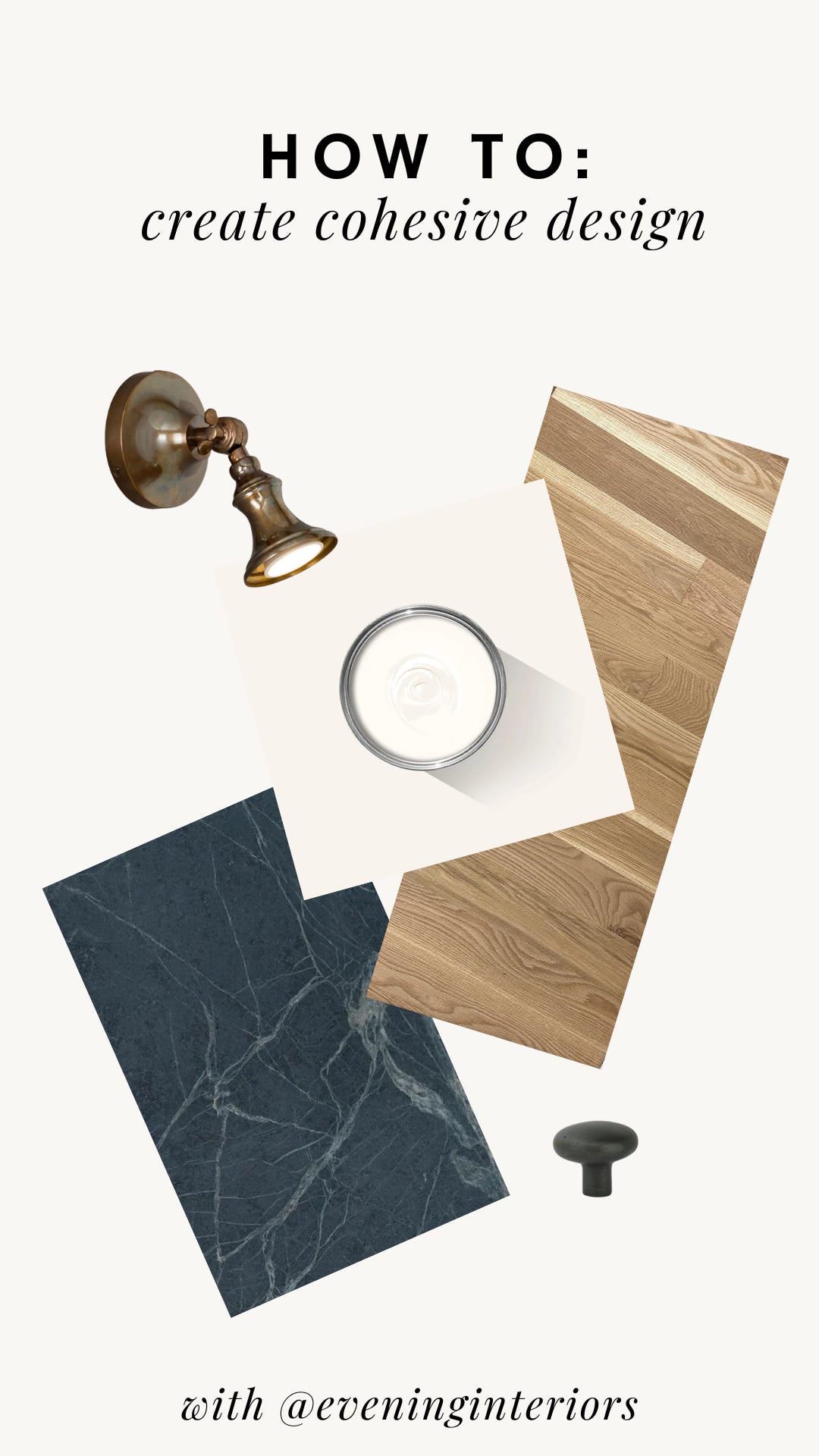
Firstly, it does not matter what style or vernacular you prefer when it comes to architecture and design, all that matters is the intentionality you bring to the space. Here are some tips to get you thinking more along the lines of what makes our built environment feel cohesive and naturally pleasant.
Tip number one:
Define what vernacular or design style the current structure/space is, or for a new build, create a CLEAR vision of what the style is going to be. This is part of client programing, before any pre-design begins. For apartment/office spaces which lack an actual “style” this is more fluid and up to individual preference. For renos, one must acknowledge dealing with a dictation of the current style and cards they’ve been dealt. At the end of the day, a defined design goal is so crucial to any job, big or small.
Follow through on this choice is where people have a hard time. You sort of have to put your blinders on, and dive deep into understanding why different styles have been established in the ways that they have. As you enlighten yourself in the principles of the design period/style, it is so much easier to create cohesiveness. I advise you look at the history/culture, instead of googling “X” type furniture/design. Start by gaining a widened view of the picture, and then build from there.
Tip number two:
Do not be afraid to modernize things.
Just because you might have chosen “Colonial” or “Art Nouveau” does not mean you need to step into a time warp and copy everything that once was. This is just your jumping off point, and you can easily bring things up to date. I should also mention, there are no absolutes, and of course a mixture of style can occur. I think it is easy to go wrong if you don’t see where things intersect awkwardly, and this is sort of why the principles of each style work so well as one set of “rules.” You are almost guarantee a home run, as the intention has been set so well by the design period.
Tip number three:
There are very objective aspects to design, and as my father would say, you simply cannot fit a square peg in a round hole. If you feel like you have a good idea, but it is not working, do not force it. Good design is being willing to to say no to some “good ideas.” Again, credit to my dad, who says: If you picked out your favorite, hat, shoes, shirt, pants, etc., and put them all on, you’d probably look terrible. The same goes for design. Some good ideas or favorites are not right together. Be ok with that.
Those are my tips to help you get going in the right direction with your project! Stay tuned for more how to’s, and thank you so much for reading.